
- February 15, 2026
- by: Public Kitchen Team
- No Comments
Ramadan in Dubai brings something really special. Masjids open their doors wider, charity kitchens run around the clock, and communities come together over shared meals.Mosque Iftar distribution in Dubai is one of the most meaningful ways communities show up for each other during the holy month. In 2026, the need for organized, reliable, and affordable Iftar solutions is bigger than ever.
Table of Contents
- Why Mosque Iftar Distribution in Dubai Matters
- How Iftar Distribution Works in Dubai Mosques
- Who Benefits from Community Iftar Programs in Dubai
- What makes a good Iftar meal for large groups?
- How Public Kitchen Supports Mosque Iftar Distribution in Dubai
- FAQs
Why Mosque Iftar Distribution in Dubai Matters
Dubai has a huge workforce, and for many workers, Ramadan is spent away from their families back home. In areas like Ras Al Khor, Al Quoz, Nad Al Sheba, and International City, large labor accommodations house thousands of workers who fast while continuing long, physically demanding workdays. Masjid committees and charitable foundations across the city step in to make sure no one breaks their fast alone or hungry.
Mosque Iftar distribution in Dubai isn’t just about food. It’s about dignity, community, and it’making sure that everyone, whether it’s a construction worker in Al Twar or a daily wage earner in Deira, has a warm, proper meal waiting for them at sunset.
How Iftar Distribution Works in Dubai Mosques
Most masjid committees in Dubai follow a structured approach to Ramadan Iftar distribution:
- Coordination with Dubai Islamic Affairs (IACAD): Mosques registered with the Islamic Affairs and Charitable Activities Department follow specific guidelines for community feeding programs.
- Volunteer and sponsor matching: Many masjids in areas like Bur Dubai, Al Karama, and Satwa connect local businesses with Iftar distribution programs.
- Nightly Iftar meals: Most mosques serve Iftar every evening throughout Ramadan. Depending on the area, that can mean feeding 100 people, or well over a thousand, each night.
- Separate Iftar spaces: In neighborhoods like Al Nahda, Hor Al Anz, and Mirdif, you’ll often see tents or cleared halls set up just for community Iftar gatherings.
Who Benefits from Community Iftar Programs in Dubai
Mosque Iftar distribution in Dubai serves a wide mix of people:
- Construction site laborers in Nad Al Hamar, Al Warqaa, and Al Mushrif
- Daily wage workers in Deira and Bur Dubai
- Low-income families in Al Karama and Oud Metha
- Migrants in labor accommodations across Dubai Silicon Oasis and Academic City
- Community members attending prayers at local masjids in Jumeirah 1, Jumeirah 2, and Jumeirah 3
That’s a lot of meals, and that’s exactly why having a trusted bulk food partner matters so much.
What makes a good Iftar meal for large groups?
When you’re serving hundreds of people at once, the food can’t be an afterthought. Organizers and mosque committees usually care about a few simple but important things:
- It has to be filling. After a long day of fasting, especially for people doing physical work, the meal needs to be proper, not just light snacks.
- Clean and safely prepared. Hygiene matters even more when food is being distributed at scale.
- Reasonably priced. Most mosque committees and charity groups are working within fixed budgets.
- Consistent every time. Whether it’s one night or all 30, the quality shouldn’t drop.
- Delivered on time. When Maghrib approaches, timing is everything, especially in areas like International City, Arabian Ranches, or JBR.
How Public Kitchen Supports Mosque Iftar Distribution in Dubai
Public Kitchen is built for exactly this kind of work. Organizing Iftar at a mosque in Dubai isn’t small-scale. It takes proper planning, dependable delivery, and people who genuinely understand what the occasion means.
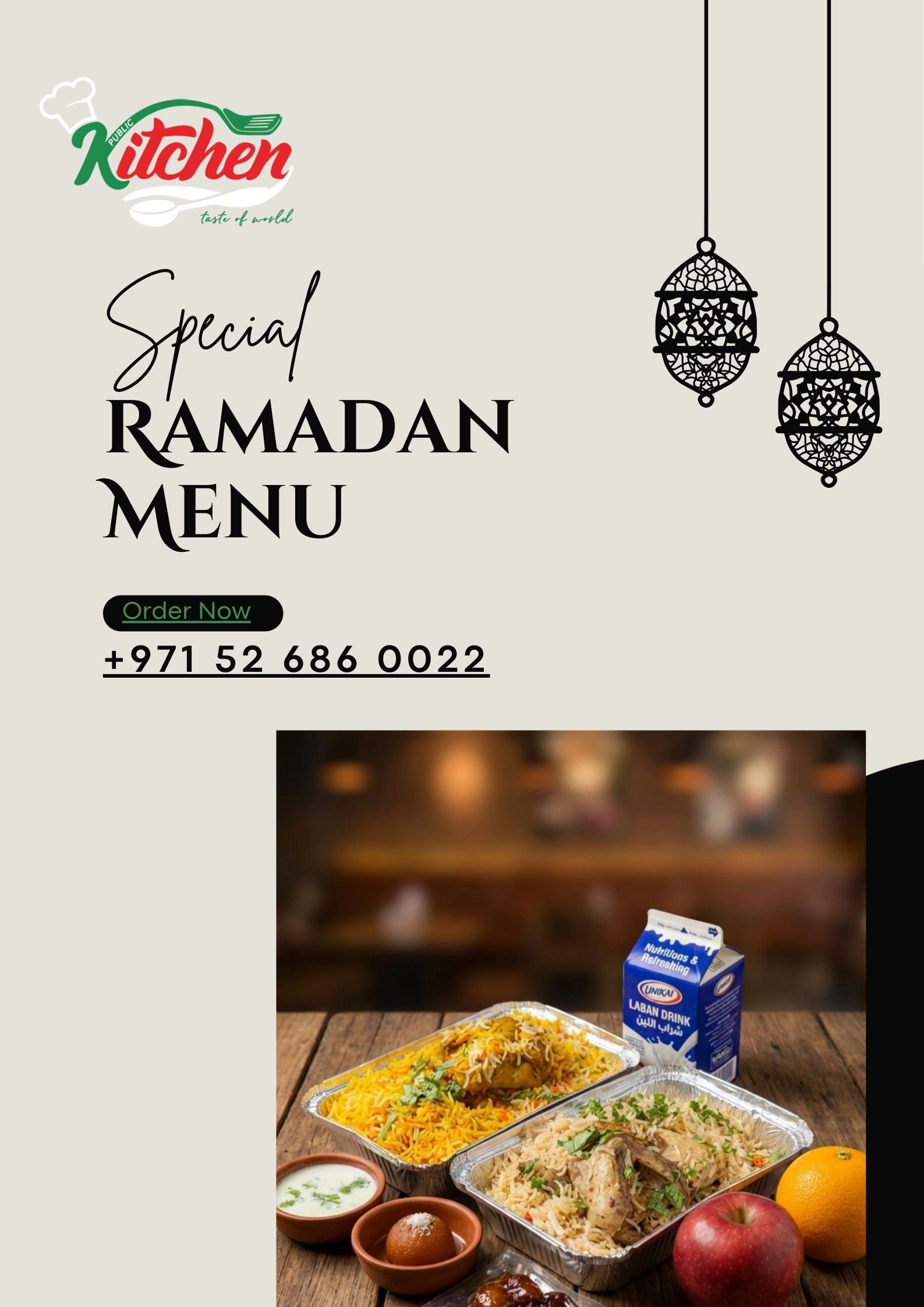
Public Kitchen works closely with mosque committees, labor accommodations, construction sites, and charity groups across the city. From bulk biryani orders to full Ramadan meal packages for large distributions, the focus is simple: food that arrives on time, in the right quantity, and ready to serve.
From Satwa to Dubai Festival City, from Al Wasl to Nad Al Sheba, Public Kitchen handles bulk orders of any size. Masjid committees can book daily Iftar deliveries for the full month. Construction site management in Al Twar or Ras Al Khor can set up weekly meal schedules. Charitable foundations can place a one-time Ramadan food donation UAE order or arrange recurring deliveries based on need.
There’s no complicated process. Community organizers just reach out to us, share the details, and Public Kitchen takes care of the rest.
FAQs
Q: What is mosque Iftar distribution in Dubai, and who organizes it?
Mosque Iftar distribution in Dubai refers to organized community Iftar programs run by masjid committees, charitable foundations, and corporate sponsors. Most programs operate under guidelines from Dubai’s IACAD.
Q: Can construction companies or labor camps sponsor Iftar meals through a mosque?
Yes. Many masjids across Dubai welcome corporate Iftar sponsorship Dubai partnerships. Companies can sponsor meals for specific nights or the full month of Ramadan.
Q: Who should we contact for Mosque Iftar distribution in Dubai?
Public Kitchen provides bulk Iftar meal packages, bulk Biryani orders, and scheduled Ramadan deliveries for masjids, labor camps, and charities across Dubai. Orders can be one-time, weekly, or for the full month.