

- February 20, 2026
- by: Public Kitchen Team
- No Comments
Ramadan brings families together at sunset for iftar. The food on the table tells a story about culture, tradition, and how times are changing. In the UAE, families face an interesting choice between traditional iftar foods and modern meal options.
This decision affects what people eat, how they spend their time, and even their budgets during the holy month.
Table of Contents
- What Makes Traditional Iftar Special
- The Rise of Modern Iftar Options
- What UAE Families Actually Choose
- Cost Comparison of Traditional vs Modern Iftar Food
- The Health Factor
- Community and Charity Iftar Meals
- Making Your Choice Between Traditional vs Modern Iftar Food
What Makes Traditional Iftar Special
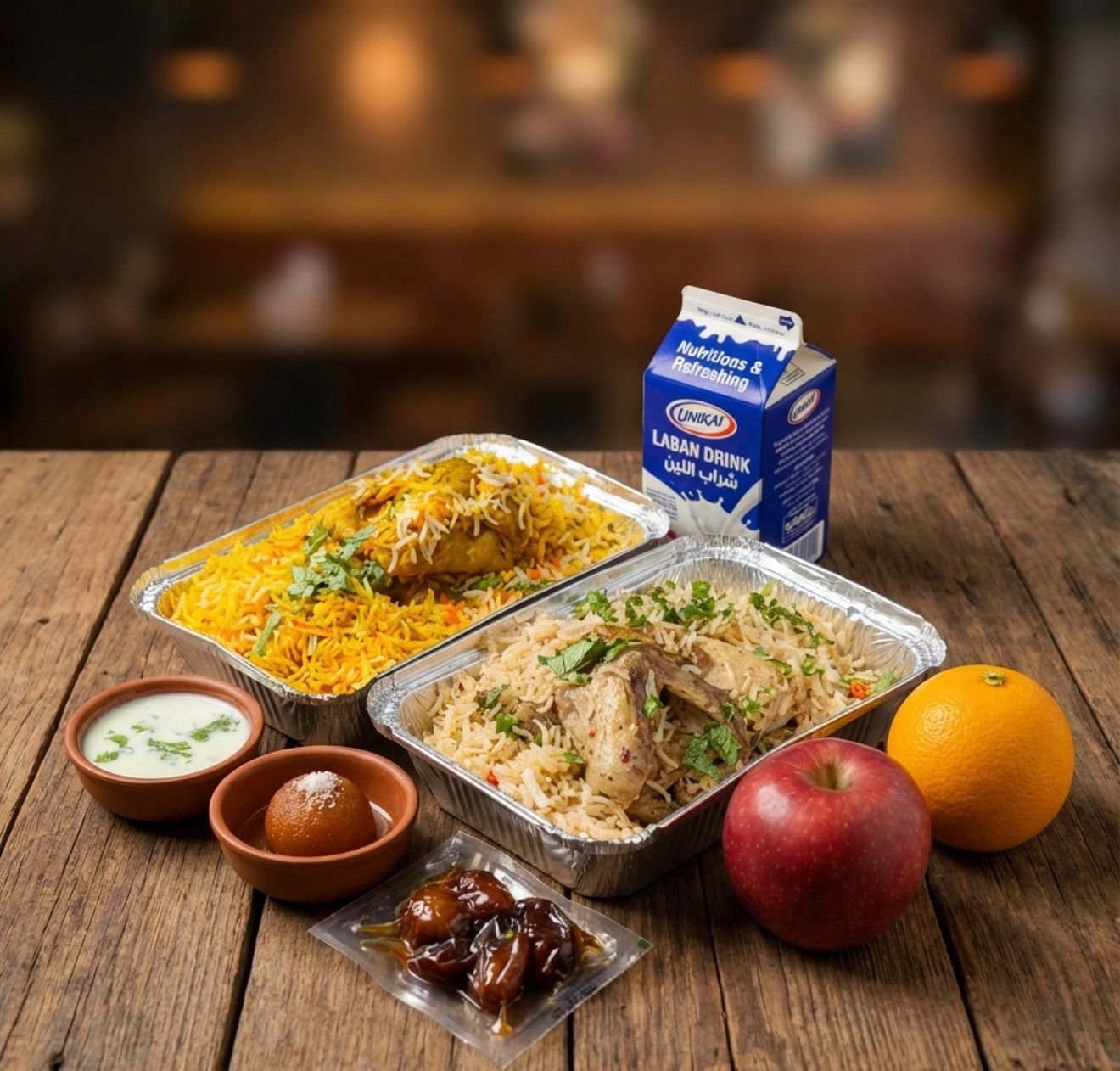
Traditional iftar starts with dates and water, following the Sunnah. Then come dishes that families have enjoyed for generations. Chicken biryani, meat pulao, hares, and laban are staples on many UAE tables.
Traditional meals also bring the family together in the kitchen. Children help wash rice, adults prepare spices, and everyone participates. This teamwork creates bonds that last beyond Ramadan.
The Rise of Modern Iftar Options
Life in the UAE moves fast. Many families have both parents working, and children attend school and activities. Finding hours to cook elaborate meals becomes hard when you’re fasting all day.
This is where modern iftar meals come in. Ready-made meal boxes, catering services, and quick-prep options save time. Families can break their fast without spending the whole afternoon cooking.
What UAE Families Actually Choose
Many UAE families don’t pick just one approach. They mix traditional and modern options throughout Ramadan. Some days they cook traditional recipes, especially on weekends when they have more time.
On busy weekdays, they might order prepared meals or use meal kits. This balance lets them honor traditions while managing their schedules. The key is finding what works for each family’s unique situation.
Cost Comparison of Traditional vs Modern Iftar Food
Traditional cooking can be budget-friendly if you buy ingredients in bulk and cook at home. Rice, chicken, and spices cost less when purchased in large quantities. However, you need time and energy to prepare everything.
Modern meal services offer convenience at different price points. Some affordable iftar meal services in the UAE provide complete boxes starting from AED 6.99. These include biryani or pulao with add-ons like dates, fruits, or samosas.
The Health Factor
Traditional recipes often use fresh ingredients and home cooking methods. You control the oil, salt, and spice levels. This helps you maintain healthy iftar options that match your family’s dietary needs.
Modern meal services vary in quality. Some focus on nutrition and use fresh ingredients prepared in licensed kitchens. Others might rely on processed foods or excessive oil. Reading reviews and choosing reputable providers makes a difference.
Community and Charity Iftar Meals
Ramadan is about sharing food with others. Many UAE families sponsor iftar for mosques, workers, or those in need. This charitable act brings blessings to everyone involved.
For mosque iftar distribution or feeding laborers, bulk ordering becomes practical. Services that specialize in large-scale meal preparation handle the logistics while you focus on the charitable intent.
Options like customizable meal boxes let you choose what to include. Whether you prefer chicken biryani with dates at AED 7.99 or meat pulao with fruits at AED 9.99, you can find packages that fit your charity budget and preferences.
Making Your Choice Between Traditional vs Modern Iftar Food
Neither traditional nor modern is better. The best choice depends on your family’s needs, schedule, and values. Some days call for a grandmother’s recipe made from scratch. Other days need the convenience of ready-made meals.
The UAE’s diverse community offers something for everyone. You can honor your culture while embracing practical solutions that make Ramadan easier. What matters most is breaking fast with loved ones, not how the food arrived on your table.