
- July 1, 2026
- by: Public Kitchen Team
- No Comments
Most people never think about what it takes to feed 300 workers every morning before a shift starts. Or how lunch for a construction site of 500 people gets planned, cooked, packed, and delivered on time, every day.
We do it every day, so let us show you what actually happens behind the scenes.
Quick Answer: How Do Companies Feed Hundreds of Workers Every Day?
Large-scale workforce meal programmes typically involve:
- Confirming workforce numbers and meal requirements
- Planning menus and sourcing ingredients
- Preparing meals in high-volume kitchens
- Packaging and portioning food for distribution
- Delivering meals on time to worker accommodations, construction sites, and other locations
For employers, the process is often much simpler. Once meal requirements are confirmed, an experienced meal provider manages the planning, preparation, packaging, and delivery process.
Why Feeding Large Workforces Requires a Structured System
Supplying meals for hundreds of workers every day is closer to managing a logistics operation than preparing family meals. Every stage, from ingredient procurement to delivery scheduling, must be coordinated to ensure workers receive meals at the right time and in the right quantities.
A delay at any stage can affect an entire workforce, which is why large-scale meal programmes depend on planning, standardised processes, and reliable distribution systems.
It Starts with Planning, Not Cooking
The biggest misconception about bulk meal distribution in Dubai is that it is mainly about cooking. It is not. It starts much earlier, with planning.
Before a single order is placed, we need to know:
- How many people are being fed
- Any dietary preferences or restrictions
- What shifts workers are operating
- When meals need to arrive
- What type of meal programme has been agreed upon
Once these requirements are confirmed, the planning, procurement, preparation, packaging, and delivery processes are managed by our team.
Behind Every Meal Is a Coordinated Supply System
Preparing food for hundreds of workers every day means buying ingredients in quantities that most households would find hard to imagine. Bulk purchasing keeps costs manageable, but it also creates responsibilities around quality and storage.
We source ingredients that are:
- Fresh and appropriate for the recipes being prepared
- Available in the quantities we need reliably
- Stored correctly to maintain food safety
Maintaining a reliable food supply for hundreds of workers requires contingency planning. Ingredient availability, menu scheduling, and procurement all need to be managed proactively to ensure workers receive consistent meals every day.
The Kitchen Operates Like a Production Line
Large-scale meal operations are not run like a restaurant kitchen. There is no individual ordering process. Meals are prepared in high volumes according to agreed workforce requirements, delivery schedules, and menu plans.
Whether meals are being prepared for 100 workers or 1,000 workers, every stage of production must be carefully coordinated so food is ready for packaging and delivery at the right time.
The workflow is tightly managed. Kitchen teams, packaging teams, and delivery teams work together to ensure meals are prepared efficiently, packed correctly, and dispatched according to schedule. When feeding large workforces, consistency and organisation are just as important as the food itself.
Packaging and Portioning Keep Distribution Manageable
Once food is cooked, it needs to be portioned and packed in a way that makes distribution at the delivery point smooth and fast.
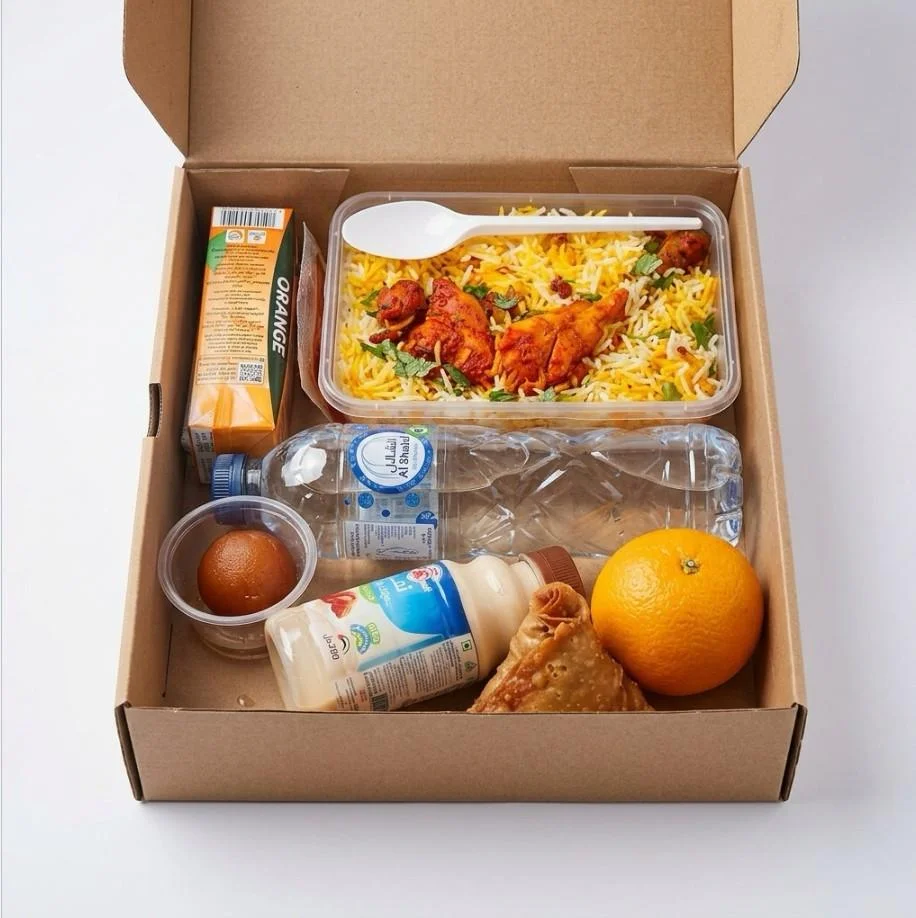
For meals going to a construction site or labour accommodation, individual portions or bulk trays are packed with:
- Clear labelling
- Temperature-safe packaging
- Appropriate quantities per container
This is where a lot of meal distribution services fall short. Packaging that leaks, containers that do not hold heat, or inconsistent portion sizes can all create problems for workers at the point of distribution. We design our packaging around the realities of field distribution.
Food Safety Is Built into Every Stage
Food safety begins long before meals are delivered. Ingredients must be stored correctly, preparation areas must follow hygiene standards, and meals must be transported in suitable packaging that helps maintain food quality.
For large workforce meal programmes, food safety is not a single step. It is a process that continues from ingredient sourcing through preparation, packaging, transport, and final distribution.
Delivery Logistics Tie It All Together
Meals for large workforces in Dubai do not just get dropped at a gate. Delivery has to be coordinated so food arrives at the right time, in the right condition, and in a format that is easy to distribute.
That means:
- Delivery vehicles suited to the volume and distance
- Scheduled arrival windows that align with shift patterns
- On-site coordination so distribution runs smoothly
- Protocols for handling any delivery issues quickly
Food delivery logistics matter as much as what is in the container.
Why Meal Distribution Is Different in Dubai
Meal distribution for large workforces in Dubai often involves construction sites, labour accommodations, industrial facilities, charitable feeding programmes, and religious institutions spread across different parts of the city.
This makes delivery scheduling, food safety, and meal timing especially important, particularly when serving workers operating on fixed shift schedules.
We Handle the Whole Process So You Do Not Have To
At Public Kitchen, we manage bulk meal distribution for labour camps, construction sites, Masjids, charities, and other large-scale operations across Dubai. From meal production to final distribution, we handle it all.
You can set up daily food supply for workers, weekly or monthly arrangements, or contact us for a one-time order, whether that is for Ramadan Iftar, a charitable feeding programme, or an urgent workforce requirement.
We scale up as needed. The operation behind it stays the same: reliable, consistent, and built around what workers actually need.
Providing meals for hundreds of workers every day requires much more than cooking. It involves planning, procurement, food preparation, packaging, food safety, and delivery logistics working together as one coordinated system. When managed properly, large-scale meal distribution helps ensure workers receive consistent, reliable meals while allowing employers to focus on running their operations.
FAQs
How do companies feed hundreds of workers daily?
Most companies rely on specialised meal providers to manage workforce food programmes. After confirming workforce numbers, meal schedules, and dietary requirements, the meal provider like Public Kitchen handles menu planning, ingredient sourcing, meal preparation, packaging, and delivery. This allows employers to focus on their core operations while ensuring workers receive reliable meals every day.
How does large-scale meal distribution work?
Large-scale meal distribution starts with detailed planning around headcounts, menus, and delivery schedules. Food is produced in high-volume kitchen operations, portioned and packaged for transport, then delivered to sites at scheduled times that align with shift patterns. Food safety is maintained throughout every stage.
How are meals delivered to labour camps?
Meals are prepared in a central kitchen, packed in temperature-safe containers, and transported to labour camps by scheduled delivery vehicles. At the camp, food is distributed according to the number of workers and their meal schedule. Delivery timing is coordinated with camp management to minimise disruption to shift routines.
How much planning goes into feeding hundreds of workers?
A significant amount of planning goes into large-scale meal distribution. Before food preparation begins, meal providers need to determine workforce numbers, menu requirements, ingredient quantities, dietary preferences, delivery schedules, and packaging needs. Careful planning helps ensure workers receive meals on time while reducing food waste and operational disruptions.
What are the biggest challenges in large-scale meal distribution?
Some of the biggest challenges include maintaining consistent food quality, sourcing ingredients reliably, managing delivery schedules, coordinating with multiple sites, and ensuring food safety throughout the process. Meal providers must also be able to adapt quickly when workforce numbers change or unexpected operational requirements arise.
How do meal providers maintain food quality during transport?
Food quality is maintained through proper packaging, temperature control, careful handling, and efficient delivery scheduling. Meals should be packed in suitable containers that help preserve freshness and minimise temperature loss during transport. Delivery routes and timings are also planned to ensure meals arrive ready to serve.
How are meal quantities calculated for large workforces?
Meal quantities are typically calculated based on workforce size, meal type, portion requirements, and expected attendance. Meal providers often build contingency allowances into their planning to account for changes in workforce numbers. Accurate forecasting helps ensure there is enough food for everyone while minimising unnecessary waste.
Order Now