

- July 5, 2026
- by: Public Kitchen Team
- No Comments
A lot of businesses end up changing food suppliers for the same reasons. Deliveries start showing up later than they used to. Meal quality becomes inconsistent. What worked well when you had 50 employees suddenly stops working when the team grows to 150.
That’s why finding a bulk food supplier in Jumeirah Golf Estates Dubai takes more than comparing prices and menus. If you’re arranging daily staff meals, you need a supplier that can handle the day-to-day realities of a busy workforce. Things change. Headcounts go up and down. Schedules shift. The supplier needs to be able to keep up.
We’ve spoken to site managers and operations teams across Dubai who care less about fancy menus and more about one simple question: can we rely on this supplier every day? That’s usually what separates a good food supplier for employee meals from one that eventually needs replacing.
Why Businesses Pay Close Attention to Staff Meal Supply
Most companies don’t spend much time thinking about staff meals when everything is running smoothly. The problems usually become noticeable when something goes wrong.
Lunch arrives late and workers lose part of their break. Meal quality starts changing from one day to the next. A sudden increase in headcount can create problems surprisingly quickly. If 20 extra workers show up and only enough meals were ordered for the original team, somebody is going without lunch. It’s the sort of issue most managers only want to deal with once.
This is especially true for construction and landscaping crews around Jumeirah Golf Estates Dubai. Meal breaks are scheduled into the day, and when food arrives late or quantities are off, the disruption is felt immediately. Workers notice it. Supervisors notice it too.
For many businesses, the question isn’t whether a supplier can provide food. Most can. The real question is whether they can keep delivering the same level of service month after month when workforce numbers, schedules, and site requirements change.
What Should Businesses Look for in a Bulk Food Supplier?
Ask a few site managers why they changed suppliers, and you’ll often hear similar answers. Deliveries became unpredictable. Menus rarely changed. Communication became difficult whenever something needed to be adjusted.
The bulk food suppliers that keep clients long term usually do a few things well:
Consistent delivery timing – Late meals disrupt work schedules. A good supplier has a fixed delivery window and sticks to it.
Menu variety over time – Workers eating the same meal every day lose appetite and morale. Rotating menus matter.
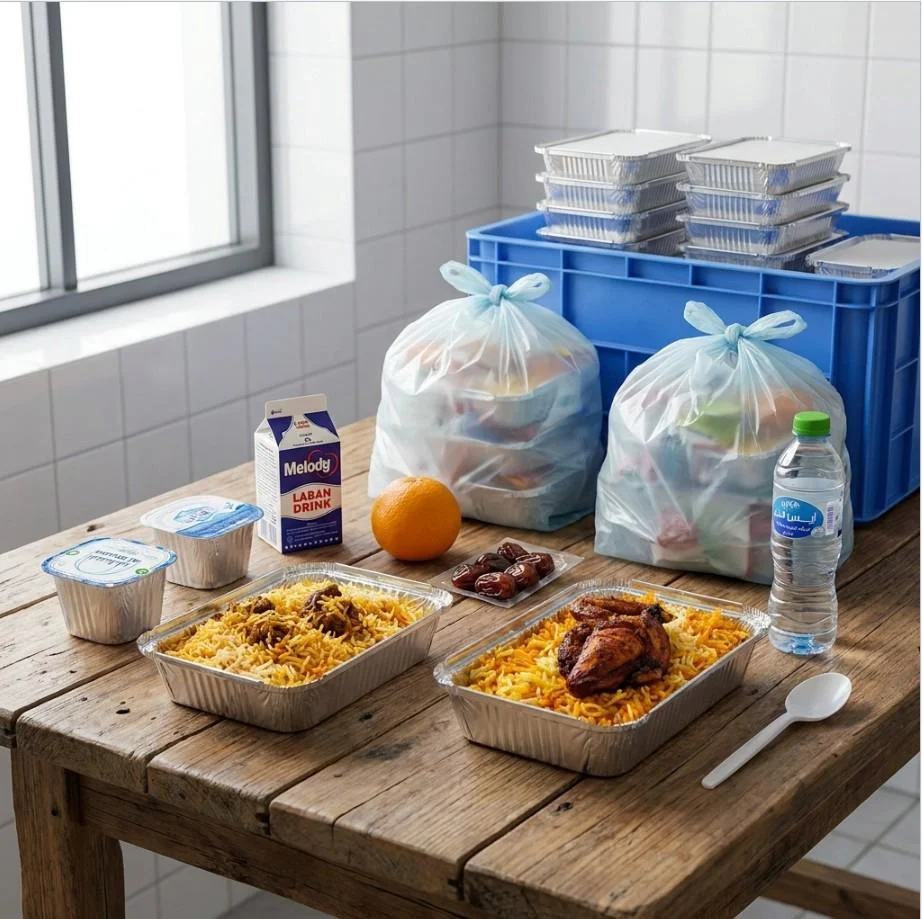
Individual portioning – Bulk containers are fine for catering events. For daily staff meals, individually portioned packs are faster, more hygienic, and easier to manage.
Responsive communication – If you need to increase headcount by 20 tomorrow, your supplier needs to handle that without a drama.
Food safety practices – Hot food stays hot. Cold food stays cold. Packaging is secure. These aren’t optional.
How Businesses Should Evaluate Food Suppliers Before Signing Up
Before committing to a bulk food delivery service for staff meals, run through these checks:
Ask for a trial order – Any serious supplier will let you test the food before you commit. If they won’t, move on.
Check their capacity – Can they handle your full headcount consistently, including peak periods? Ask directly.
Review their delivery process – Do they use temperature-controlled vehicles? How do they handle delays?
Understand their ordering system – Is it easy to adjust headcounts weekly? Can you do it online or by phone?
Talk to their existing clients – References matter. Ask specifically about reliability, not just food quality.
Questions to Ask a Potential Staff Meal Supplier
Before agreeing to anything long term, it’s worth having a detailed conversation with the supplier. A lot of problems can be avoided simply by asking the right questions upfront.
Some useful questions include:
- What is your standard delivery window for Jumeirah Golf Estates Dubai?
- How much notice do we need to give for headcount changes?
- What happens if a delivery is late or incomplete?
- How is food packaged and kept at safe temperatures during delivery?
- Can we adjust meal quantities if workforce numbers change?
- What happens during public holidays or Ramadan?
The answers matter just as much as the food itself. If a supplier struggles to explain their process before you’ve signed up, things rarely get easier afterwards.
What Does a Well-Managed Staff Meal Program Look Like?
There’s no single formula, but the meal programs that run smoothly usually have a few things in common.
- Deliveries arrive at the same time each day
- Meals are packed individually for easy distribution
- Menus change regularly throughout the week
- Headcounts can be adjusted without unnecessary complications
- There is a clear point of contact if something goes wrong
None of these things sound particularly complicated, but they’re often the difference between a meal program that runs quietly in the background and one that creates daily issues for managers and supervisors.
How to Reduce Staff Meal Costs Without Cutting Quality
Most businesses aren’t looking for the cheapest meals possible. They’re looking for good value and predictable costs.
A few simple adjustments can make a noticeable difference:
Commit to regular volumes – Suppliers can usually plan production more efficiently when orders are consistent rather than changing dramatically from week to week.
Keep menus practical – Complex menus often increase costs without adding much value. Simple, well-prepared meals are usually easier to deliver consistently.
Review portion sizes periodically – Portions that are too large create waste. Portions that are too small create complaints. Finding the right balance saves money and improves satisfaction.
Adjust orders based on actual attendance – If certain shifts or workdays regularly have lower numbers, meal quantities should reflect that rather than relying on the same order every day.
Most cost savings come from better planning rather than cutting corners on food quality.
Why Jumeirah Golf Estates Dubai Businesses Trust Public Kitchen
At Public Kitchen, we understand what workforce meal management actually looks like on the ground. We supply bulk meals for construction teams, facility workers, labor accommodations, and support staff across Jumeirah Golf Estates Dubai and wider Dubai.
Our daily staff meal programs are:
- Delivered on time, every day
- Individually portioned for easy distribution
- Freshly prepared with rotating menus
- Adjustable with reasonable notice
- Affordable for large teams
If you’re managing a team and need a food supplier you can actually count on, we’d love to talk.
Get in touch to discuss your daily staff meal requirements.
FAQs
What makes a bulk food supplier reliable for daily staff meals?
Most managers aren’t looking for anything complicated. They want meals to arrive on time, portions to stay consistent, and somebody to answer the phone when plans change. Reliability usually comes down to consistency. If a supplier can deliver the same level of service every day, even when headcounts change, that’s usually a good sign.
How should businesses evaluate a food supplier before signing a contract?
The easiest way is to test them. Ask for a trial order and pay attention to more than just the food itself. Did the delivery arrive when promised? Was the packaging practical? Did employees actually enjoy the meal? Those details often tell you more than a sales presentation ever will.
What questions should companies ask a potential meal supplier?
Start with the basics. Ask about delivery times, how much notice is needed for headcount changes, and what happens if a delivery is delayed. It’s also worth asking how meals are prepared, packaged, and transported. The clearer the answers, the easier the supplier is likely to be to work with.
Are individually packed meals better for staff meal programs?
In many cases, they are. If everyone eats at the same place and at the same time, shared serving containers can work. But that’s not how most workplaces operate. Construction crews, facility teams, and support staff are often spread across different locations or working different shifts. Individually packed meals are simply easier to hand out, easier to track, and generally create fewer issues during busy meal breaks.
How can businesses reduce staff meal costs without lowering quality?
One of the easiest ways is to stop paying for meals that nobody eats. It sounds obvious, but it happens all the time. Headcounts change, shifts get cancelled, projects slow down, and the meal order stays exactly the same. Before looking at cheaper menus, it’s worth looking at how much food is actually being used each day.
What industries commonly use bulk meal delivery services in Dubai?
Anywhere you have a large team working fixed hours, there’s usually a need for bulk meal delivery. Construction sites are probably the most visible example, but they’re not the only ones. Facility management companies, labor accommodations, security teams, warehouses, maintenance contractors, and logistics operations all use meal delivery services because feeding a large workforce every day isn’t something most businesses want to manage themselves.